
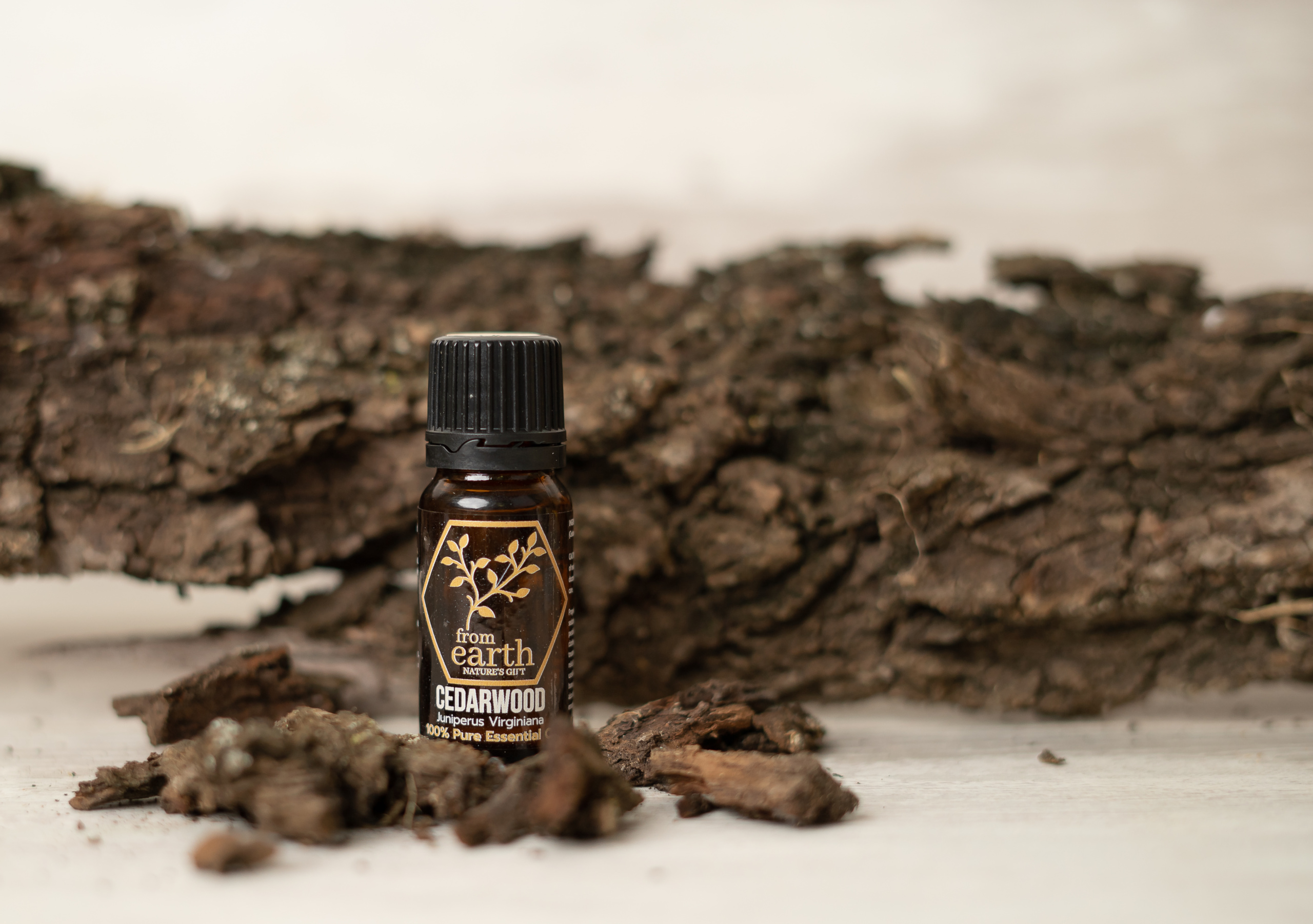
Fun Fact!
The use of cedarwood essential oil dates back thousands of years in the past, leading to believe that it was one of the first oils to be distilled in human history. Ancient Egyptians also used this oil in their embalming rites, just like others such as thyme.
Juniperus virginiana (virginian cedarwood) is native to the eastern United States and Canada. Virginian cedarwood has long been known to possess natural moth repelling properties which have been used in chests, wardrobes and closets. Research has found that cedarwood oil does not repel mosquitoes very well, but it does repel ants.
Symbolizing the tree of life and known as the ‘medicine tree’. In aromatherapy, cedarwood virginian essential oil is used in massage blends to treat muscular aches and pains, painful joints, rheumatism and arthritis. It is particularly beneficial when blended with Roman or German chamomile essential oils.
It has similar cleansing and purifying properties as juniper berry essential oil and has a stimulating action on the kidneys and bladder. This means it produces an effective synergy that encourages the elimination of uric acid and relieves the symptoms of arthritis and rheumatism when blended together with chamomile Roman or German for body massage and bath soak treatments.
The antiseptic properties of cedar Virginian essential oil are ideal for soothing acne, spots, and oily skin conditions when it is blended in a base lotion or cream. If you suffer from dandruff or a very dry scalp that is shedding white flakes, add it to a shampoo base to improve the condition of both your scalp and hair. Cedar Virginian essential oil is a surprisingly effective decongestant that clears blocked sinuses and helps to ease coughs due to its gentle but effective antispasmodic action. It also has useful antiviral properties, making it even more useful in blends for coughs and colds.
Please note: This is not a cure. Consult with your doctor before making any health changes. Especially any changes related to a specific diagnosis or condition.